

For the pain physician, Urine Drug Testing (UDT) is not a tool for "catching" patients; it is a...
The Use of CBD for Chronic Pain: Exploring Different Versions and Their Implications
Chronic pain affects millions of individuals globally, presenting a significant challenge to their overall well-being and quality of life. In recent years, the utilization of cannabidiol (CBD) as a potential remedy for managing chronic pain has sparked substantial interest and ongoing research. With various versions of CBD available, discerning the differences between these versions and understanding their potential applications in chronic pain management is crucial. This comprehensive article delves into the multifaceted aspects of using CBD for chronic pain, including the different versions of CBD, their mechanisms of action, associated risks, preparations, applications, THC interactions, and implications for drug screenings.
Different Versions of CBD
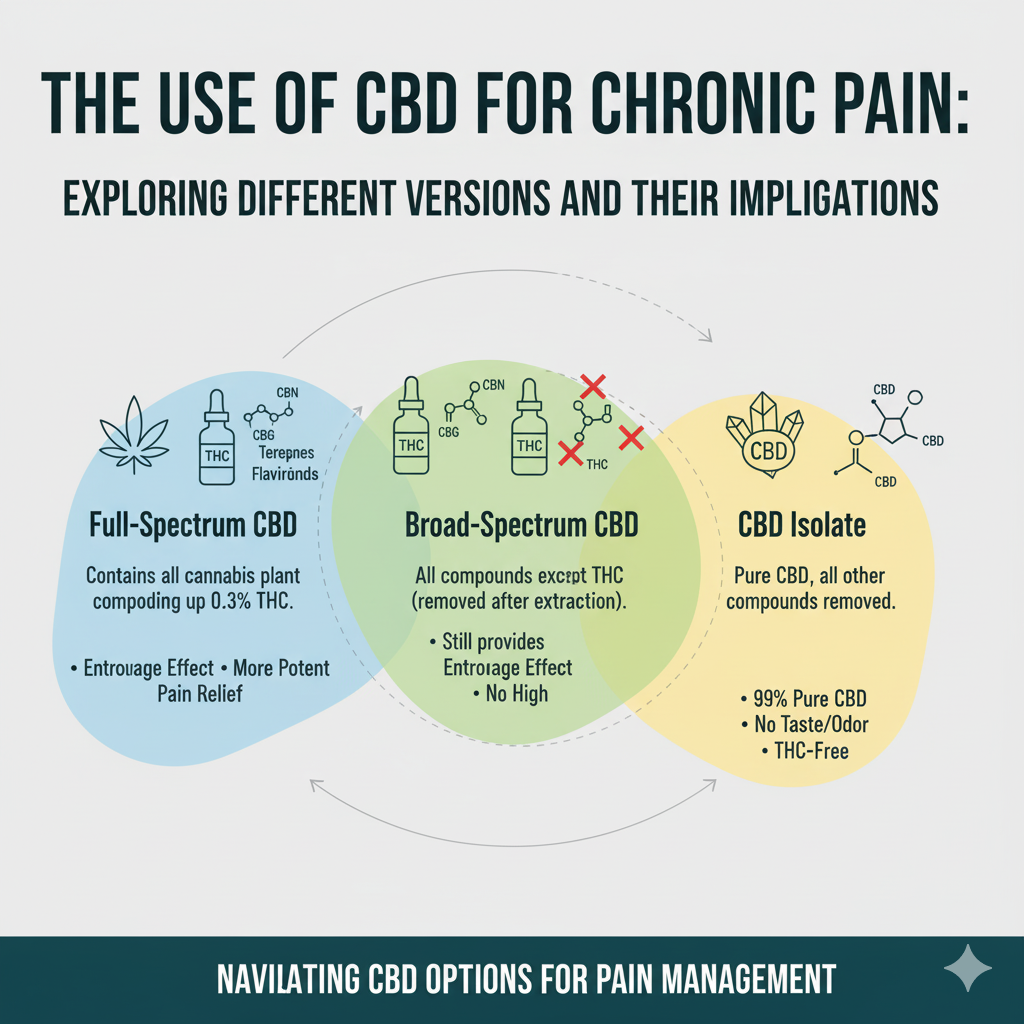
CBD, a prominent cannabinoid extracted from the cannabis plant, is accessible in several versions, notably full-spectrum CBD, broad-spectrum CBD, and CBD isolate. Each version encompasses a distinct composition of compounds extracted from the cannabis plant, leading to varying effects on the body and potential applications in managing chronic pain.
- Full-Spectrum CBD: This version encompasses all the compounds naturally found in the cannabis plant, including various cannabinoids, terpenes, and essential oils. The synergistic interaction of these compounds, a phenomenon known as the “entourage effect,” may potentially augment the therapeutic effects of CBD for some individuals. As a result, full-spectrum CBD is often favored by those seeking comprehensive and holistic pain relief.
- Broad-Spectrum CBD: Analogous to full-spectrum CBD, this version contains multiple cannabis plant compounds. However, it undergoes additional processing to eliminate all traces of THC, the psychoactive component of cannabis. For individuals sensitive to THC or concerned about its psychoactive effects, broad-spectrum CBD presents a viable alternative without compromising the potential benefits of other cannabis compounds.
- CBD Isolate: This version comprises pure CBD, devoid of all other cannabis compounds. Due to its isolated nature, CBD isolate lacks the synergistic effects present in full-spectrum and broad-spectrum CBD. Nevertheless, individuals requiring high doses of CBD or seeking to avoid all other cannabis compounds may opt for CBD isolate to address their specific needs.
- Delta-8 and delta-9 tetrahydrocannabinol (THC) are two cannabinoids found in cannabis. Delta-9 THC is the primary psychoactive component of cannabis, while delta-8 THC is similar in structure and produces milder effects. Research suggests that delta-8 THC may exhibit antiemetic, anxiolytic, and neuroprotective properties. Both variants interact with the body’s endocannabinoid system, but delta-8 THC is believed to offer a less potent high than delta-9 THC.
Choosing the Right Version of CBD
The selection of a particular version of CBD hinges on individual preferences, sensitivities, and the desired therapeutic outcomes. Full-spectrum CBD may be preferable for those who respond well to a wide array of cannabis compounds, while broad-spectrum CBD may appeal to individuals seeking a THC-free option. Conversely, CBD isolate offers a pure, concentrated form of CBD suitable for individuals with specific dosage requirements or sensitivities to other cannabinoids.
Mechanism of Action
CBD interacts with the body’s endocannabinoid system, a complex network of receptors and neurotransmitters that play a pivotal role in regulating various physiological processes, including pain perception. By modulating endocannabinoid receptor activity, suppressing inflammation, and influencing neurotransmitter levels, CBD exerts its analgesic effects, potentially offering relief to individuals grappling with chronic pain.
Risks Associated with CBD Use
While CBD is generally well-tolerated, it’s imperative to acknowledge potential risks, particularly when utilizing it for managing chronic pain. Some individuals may experience side effects such as dry mouth, diarrhea, reduced appetite, or fatigue. Additionally, CBD can interact with certain medications, underscoring the importance of exercising caution and seeking medical supervision when using it concurrently with other drugs.
Preparations and Applications
CBD for chronic pain management is available in a myriad of forms, encompassing oils, tinctures, capsules, topicals, and edibles, each offering unique advantages in terms of onset time, duration of effects, and convenience. Notably, topical CBD preparations are particularly favored for localized pain relief, while oral formulations provide systemic relief for widespread pain conditions.
THC Interactions and Implications for Drug Screens
Given that some versions of CBD contain traces of THC, albeit within legal limits, individuals should remain mindful of potential interactions and the implications for drug screenings. Full-spectrum CBD and broad-spectrum CBD may contain detectable levels of THC, which could potentially lead to positive results in drug screenings. Consequently, individuals subject to drug screenings or sensitive to THC should consider using CBD isolate or thoroughly vetted THC-free products to mitigate the risk of unwanted repercussions.
In conclusion, the use of CBD for managing chronic pain presents a promising avenue, offering a natural alternative for individuals seeking relief from persistent discomfort. Garnering a comprehensive understanding of the different versions of CBD, their mechanisms of action, associated risks, preparations, applications, THC interactions, and implications for drug screenings is indispensable in making well-informed decisions regarding the utilization of CBD in chronic pain management.
Citations
- Russo EB. (2008). Cannabinoids in the management of difficult to treat pain.
- Baron EP. (2018). Medicinal properties of cannabinoids, terpenes, and flavonoids in cannabis, and benefits in migraine, headache, and pain: an update on current evidence and cannabis science.
- Piomelli D, Russo EB. (2016). The Cannabis sativa versus Cannabis indica debate: an interview with Ethan Russo, MD.
- Mlost J, Bryk M et al. (2021). Cannabidiol for Pain Treatment: Focus on Pharmacology and Mechanism of Action.
- Manzanares J, Julian M, Carrascosa A. (2006). Role of the cannabinoid system in pain control and therapeutic implications for the management of acute and chronic pain episodes.
- Belendiuk K, Baldini LL et al. (2015). Use and Effects of Cannabinoids in Military Veterans with Posttraumatic Stress Disorder..
- Watanabe, K., Yamaori, S., Funahashi, T., Kimura, T., & Yamamoto, I. (2007). The 2021 Cannabinoid Report. Chemistry & Biodiversity, 4(8), 1729–1743.
Toxicology and Urine Drug Testing (UDT)
For the pain physician, Urine Drug Testing (UDT) is not a tool for "catching" patients; it is a critical safety intervention and an objective component of risk stratification. On the board exams, UDT questions are notoriously high-yield, focusing on the metabolic...
Adjuvant Medications—Alpha-2 Agonists and Steroids
In the pharmacological management of pain, "adjuvant" medications are those primarily indicated for non-pain conditions (such as hypertension or inflammation) that possess significant analgesic properties. Alpha-2 Adrenergic Agonists and Corticosteroids are essential...
Explore More
Toxicology and Urine Drug Testing (UDT)
For the pain physician, Urine Drug Testing (UDT) is not a tool for "catching" patients; it is a...
Adjuvant Medications—Alpha-2 Agonists and Steroids
In the pharmacological management of pain, "adjuvant" medications are those primarily indicated...
Topical Analgesics—Lidocaine, Capsaicin, and Compounded Creams
In the modern landscape of pain management, topical analgesics have transitioned from "ancillary"...