

For the pain physician, Urine Drug Testing (UDT) is not a tool for "catching" patients; it is a...
Chronic Pain in Children and Adolescents: A Multidisciplinary Approach
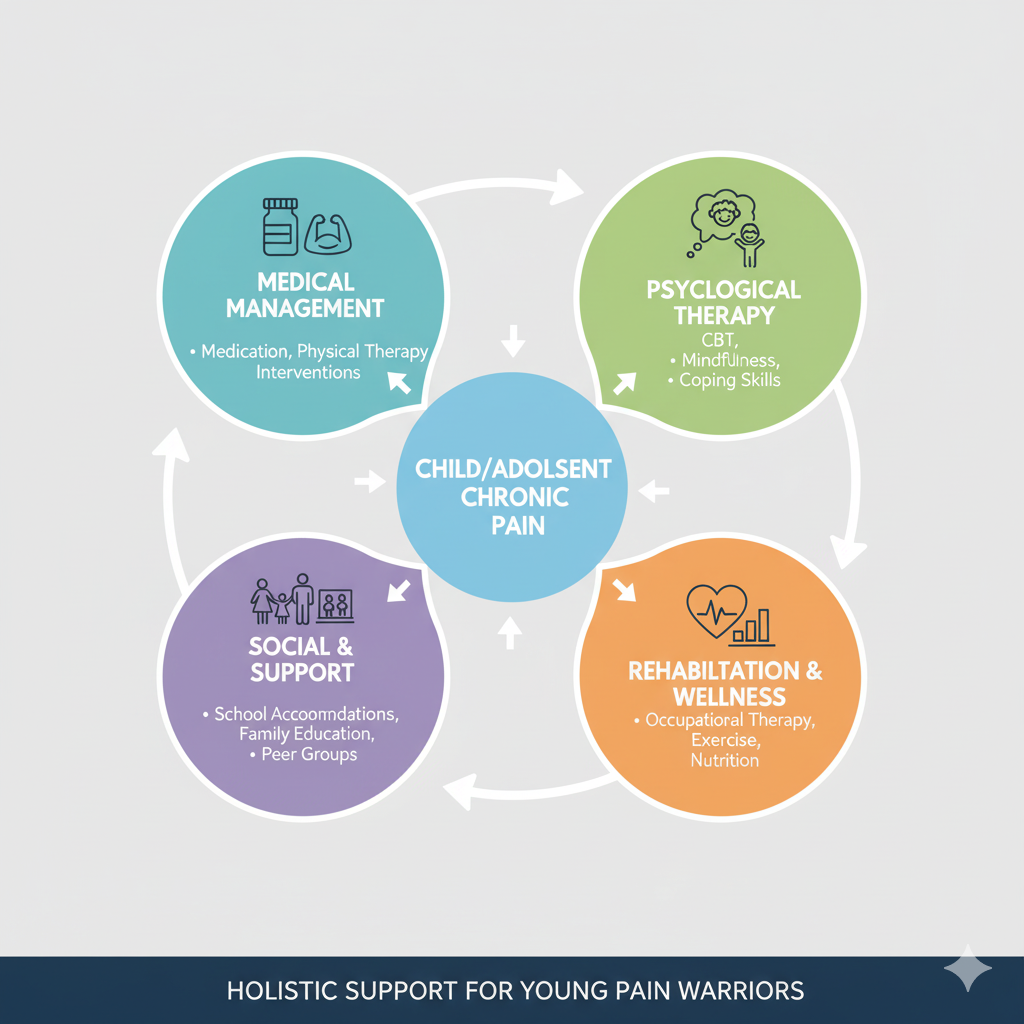
Chronic pain in children and adolescents, often defined as pain lasting longer than three months, is a prevalent and disabling condition that can severely impact physical, social, and emotional development. Unlike acute pain, which serves as a protective warning of tissue injury, chronic pain often becomes a disease in its own right, driven by complex biopsychosocial factors. Managing pediatric chronic pain requires a significant shift away from a purely biomedical model towards an integrated, multidisciplinary approach that addresses the child’s function and quality of life as the primary goals.
Unique Aspects of Pediatric Pain
Assessing and managing pain in children presents unique challenges compared to adults.
- Developmental Stage: A child’s ability to understand, verbalize, and localize pain varies significantly with age. Infants and toddlers express pain through behavioral cues (crying, facial expressions, guarding), while school-aged children can begin to use simple pain scales.
- Pain Memory: Early painful experiences can alter the developing nervous system, potentially leading to increased pain sensitivity and a higher risk for chronic pain later in life.
- Family Dynamics: The family plays a crucial role. Parental anxiety, beliefs about pain, and protective behaviors can either help or hinder a child’s ability to cope and recover. The family system must be a central part of any treatment plan.
Assessment of the Pediatric Patient with Chronic Pain
A comprehensive assessment is the foundation of effective management and must incorporate the biopsychosocial model.
- Pain History: In addition to standard questions (onset, location, quality), it’s vital to explore the pain’s functional impact. Key questions include:
- “What does the pain stop you from doing?” (e.g., going to school, playing sports, seeing friends).
- “How does the pain affect your sleep and mood?”
- Pain Scales: Use age-appropriate tools.
- Faces Pain Scale-Revised (FPS-R): Useful for children as young as 4.
- Numeric Rating Scale (NRS): Reliable for most children aged 8 and older.
- Psychosocial Screening: Screen for anxiety, depression, and catastrophizing in both the child and the parents. Assess for fear-avoidance behaviors and functional disability (e.g., using the Functional Disability Inventory).
- Physical Examination: A thorough musculoskeletal and neurological exam is essential to rule out red flags (e.g., night pain, weight loss, neurological deficits) and identify any underlying pathology.
Common Chronic Pain Syndromes in Children
While any condition can become chronic, several syndromes are particularly prevalent in the pediatric population, often characterized by pain amplification.
- Amplified Musculoskeletal Pain Syndrome (AMPS): An umbrella term for non-inflammatory pain conditions like juvenile fibromyalgia and complex regional pain syndrome (CRPS). It is characterized by pain that is out of proportion to what would be expected from any identifiable injury. It is thought to be a disorder of central sensitization where the nervous system is “stuck” in a high-gain state.
- Chronic Headaches: Migraine and tension-type headaches are very common. Chronic daily headache (defined as >15 headache days per month) is a major cause of school absenteeism.
- Abdominal Pain: Functional abdominal pain and irritable bowel syndrome (IBS) are common disorders of gut-brain interaction, where pain arises from disordered central processing of visceral signals rather than gut pathology.
- Chronic Widespread Pain / Juvenile Fibromyalgia: Characterized by pain in multiple body quadrants, fatigue, unrefreshing sleep, and cognitive symptoms (“fibro fog”).
The Multidisciplinary Treatment Approach
The gold standard for treating pediatric chronic pain is an intensive, coordinated, multidisciplinary approach focused on restoring function. The core team typically includes a physician, a physical therapist, and a psychologist.
- Physical and Occupational Therapy (The “Bio”): This is the cornerstone of treatment. The goal is not to “fix” the pain but to improve function despite the pain.
- Intensive Graded Exercise: Gradually increasing physical activity to reverse deconditioning and desensitize the nervous system.
- Desensitization Techniques: For allodynia and hyperalgesia (common in CRPS), using various textures and graded motor imagery.
- Focus on Function: The mantra is “function over feeling.” Therapy focuses on returning to school, sports, and social activities.
- Psychological Intervention (The “Psycho”):
- Cognitive-Behavioral Therapy (CBT): Helps children identify and change maladaptive thoughts (catastrophizing) and behaviors (fear-avoidance) related to their pain.
- Parent Education: Training parents to be effective “coaches” by encouraging function, validating their child’s feelings without reinforcing illness behavior, and managing their own anxiety.
- Biofeedback and Relaxation Training: Teaches children skills to self-regulate their physiological stress response.
- Medical Management:
- Pharmacology: Medications play a supportive, not primary, role. Opioids are almost never indicated for chronic non-cancer pain in children. Adjuvant medications like amitriptyline or gabapentin may be used cautiously for specific indications (e.g., neuropathic pain, sleep), but the focus remains on non-pharmacologic strategies.
- Interventions: Nerve blocks and other injections are rarely used and are reserved for very specific, well-defined indications.
Conclusion
Chronic pain in children and adolescents is a complex biopsychosocial condition that requires a paradigm shift from finding and fixing a biomedical problem to restoring function and promoting self-management. The most effective treatment is an intensive, integrated program of physical therapy and psychology, with the entire family engaged as active participants. By focusing on function over feeling, clinicians can empower young patients to overcome disability and reclaim their lives from chronic pain.
Neuromuscular Scoliosis and Spasticity-Related Pain: Biomechanics and Management
Pain in children with neuromuscular disorders, such as Cerebral Palsy (CP), Spinal Muscular Atrophy (SMA), or Duchenne Muscular Dystrophy, is often multifactorial and under-recognized. Unlike idiopathic scoliosis, which is rarely painful in adolescence, neuromuscular...
Regional Anesthesia and Procedural Sedation in Children: Safety, Anatomy, and Technique
The use of regional anesthesia in pediatrics has expanded significantly, shifting from strictly "surgical" use to a vital component of chronic and subacute pain management. Whether performing a block for post-operative recovery or providing sedation for a painful...
Explore More
Toxicology and Urine Drug Testing (UDT)
For the pain physician, Urine Drug Testing (UDT) is not a tool for "catching" patients; it is a...
Adjuvant Medications—Alpha-2 Agonists and Steroids
In the pharmacological management of pain, "adjuvant" medications are those primarily indicated...
Topical Analgesics—Lidocaine, Capsaicin, and Compounded Creams
In the modern landscape of pain management, topical analgesics have transitioned from "ancillary"...